Episode Transcript
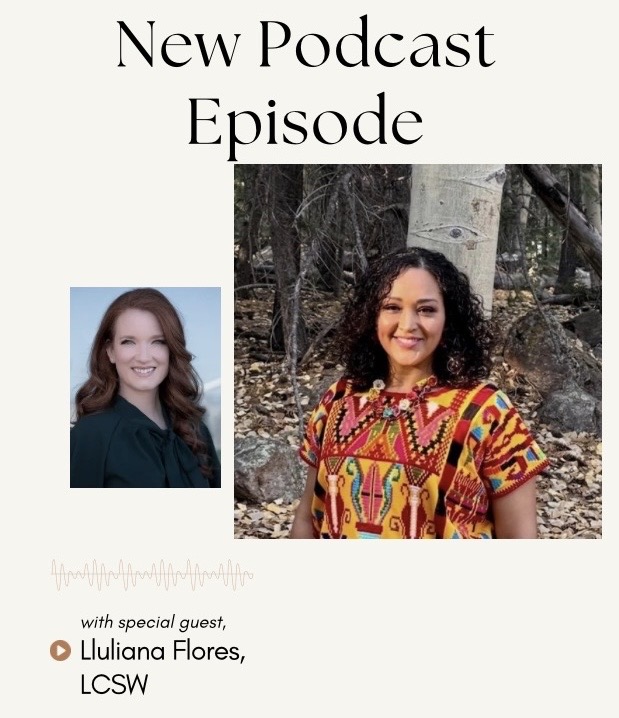
[00:00:00] Speaker A: Hi and welcome back to beyond the Chair, the Therapist Companion. I'm your host, Sonja Anderson Hale, a licensed professional counselor. And today I am meeting up with a friend. Her name is Juliana Flores. She's a licensed clinical social worker. We have known each other for about 10 years, maybe more. We came up together in community mental health.
And today the topic that we're talking about kind of all encompassingly has to do with decolonization, counselor, burnout, combating burnout, self representation, and then a discussion about community mental health.
And it might be a two parter, it's pretty long, so I have cut it already. But just keeping in mind that this is all, you know, our personal understanding of things and our perspective.
So as always, keeping up with your ethical codes and what your state requirements are, this is just to spark discussions and hopefully you enjoy.
I also feel like you can kind of tell that we've known each other a really long time. And so we kind of talk to each other like we've known each other a long time.
And I think that that was one of my most favorite things, kind of listening back to it.
[00:01:26] Speaker B: One of the things that I think has been a way for me to be more connected is by trying to connect to my roots.
And so I guess I'm trying to introduce myself differently. So my name is Juliana Flores.
She, her ella pronouns, and I am the daughter of Ana Salguero and Jesus Flores.
And I am indigenous or indigenous from Santa Ana and San Miguel, El Salvador in Central America.
And I was born and living in Hohokam Land, currently known as Mesa, Arizona or Phoenix, Arizona.
Well, I was born in Phoenix, but now I'm living in Mesa. A little bit about me, and I currently have a private practice.
And one of the things that I've been trying to do is one, you know, this word of decolonizing therapy, which I like the term and the idea, but I think both you and I have done that, which is more like looking at the person as a whole, as a system, their environment.
In a way, I say we've been doing that for a while.
[00:02:41] Speaker C: So what is the decolonization from the perspective of the Latinx group or just in general?
[00:02:50] Speaker B: Decolonizing means, I think, taking into account the person's environment, their culture, how the system, you know, might be affecting what they're going through, not focusing so much on the diagnosis and more about how whatever is happening to this person is leading to the symptoms.
And then a lot of the times, you know, what we learn in school is often what person pertains or relates more to like middle class, male, white.
And so the idea is to be able take into account the person's culture and figure out how your interventions and what you're doing can include their culture and not just what we've learned in school, which was mainly for white middle class men. I don't know if that.
[00:03:51] Speaker C: Yeah, that makes sense to me. Yeah. So stuff that we've already been doing is just kind of got a different term.
[00:03:59] Speaker B: Yeah, I know some people might disagree with that, but really, I think, yeah, if you look into what is decolonizing, it's the idea of, you know, bringing in more of the person's traditions, culture versus impulse, what the theories say or what the interventions say. Right. And I do think that some people, some therapists naturally already do that because I know initially when I would hear decolonize, decolonize, I was like, oh my gosh, what is that term? How do I get to that? And as I, you know, read about it, did some trainings, I'm like, oh, wait, I kind of already do that, you know, so.
[00:04:46] Speaker C: Yeah, well, I think that like, we kind of recognized from community mental health that the DSM doesn't really hit on, like, it's, it's checking boxes of boxes that we don't even really know. Like, yeah, it might have been middle class white males that were, well, rich. Middle class to me is like, rich, you're richer anyway. So, yeah, like, it might have been based on that. It's definitely based on boys. And I can say that for sure with like autism, the things that were so behind with being able to diagnose girls, autism because they look so different. But I think, yeah, we like ran into being disenfranchised by the DSM from the jump with the whole litany of people that we met with, even if they were white middle class males. It's like this doesn't really fit.
So it kind of sounds like you guys are like, fuck the DSM a little bit.
[00:05:41] Speaker B: The dsm. And I mean, yes, I'm like, if we could, the whole system and you know.
Yeah.
[00:05:52] Speaker C: So I think, I think the one thing that I would say that I know some people run into is like, how do I bring culture of my client into the session? Or whose responsibility is it to bring culture into the session?
[00:06:08] Speaker B: I think that's a tough question because some individuals will feel comfortable sharing about their culture. And for some it might feel like what we call emotional labor. Right. Having to explain what things mean or how it makes them feel.
And so I think one As a therapist is trying to learn about different cultures, trying to learn about your client's culture, being considerate and open to what they share, and that flexibility between.
Okay, I read this, I know this about the culture. This is what's out there in the research.
And how does it apply here and allowing your client to then give you feedback on that. Yeah, it's. It's tough because I don't think there's just one set way.
Again, it goes back to that individual person, and some of them will love to talk about their culture and teach you about it. And for some, it might feel like labor to have to do that. And so, yeah, if you're, you know, if you're working with a lot of Latina individuals, a of lot. Lot of bipoc individuals, taking some trainings on how to work with that population, how to best support them, because at least you have a basis, and then the client doesn't feel like it's all on them, if that makes sense.
[00:07:36] Speaker C: Yeah, for sure. And I think that, like, to reiterate, it's just the idea that you would be getting a training to give you just a general idea of what could be going on, and then you meet your client, where they're at, and they. They tell you what does fit within their culture, what doesn't fit within their culture. Because every household is different as well, so.
[00:07:55] Speaker B: Different too. Yeah, yeah. Even some words have different meanings. Right. So I would share that. When I first started, I.
[00:08:08] Speaker C: I have.
[00:08:08] Speaker B: A lot of family members that are Mexican.
A lot of them are from, like, the south, a lot of them from the north. And then my family's from Central America. And so I would talk in sessions, and some people would be like, what does that mean? And I'm like, what do you mean? What does that mean? You know, they don't know the word, or they would say words that I didn't know. And initially I felt like I should know everything. You know, when you first start, you feel like you should know everything. And sometimes I even felt like I shouldn't do therapy in Spanish because I. I don't know all the words. Right.
But the more I did it and the more I was say, like, transparent with the clients, letting them know, like, oh, well, you know, this is what it means for me. I didn't know I had that meaning too. Thank you so much for letting me learn. It became kind of even rapport building because it also allowed them to be a teacher, you know, and. And that can feel empowering too, you know, and we also Laughed about it together. And I allowed them to laugh at me when they thought my meaning was, you know, too different.
What was the question?
[00:09:20] Speaker C: Well, I don't remember, but I do think that I can give maybe a tangible example of this. So when I say the word, what does the word idiota mean to you? Like, what reaction do you have to that word?
[00:09:33] Speaker B: Um, yeah, for me, it'd be a little bit more of a.
What we call activating, right? Little kind of my body just starts reacting like, do not. Do not call me that. Right?
[00:09:46] Speaker C: Yeah. So my mom's reaction to. I. I don't remember. I feel like my dad and my mom are having a conversation at some point in time.
And maybe my dad. I remember I was pretty young when this happened. So it's all kind of choppy, right? But, like, my dad said something about idiot, and it must have been something that my mom had done or adjacent to something that my mom did. And my mom started flipping out. She was like, idiot, idiota. And they're just like, lost it. Like, it's the worst thing that you could possibly say to somebody. And then for me, I knew this translates to idiot. And to me, idiot is like, not that visceral reaction, right? I don't have that. Where I'm like. But also, I have never been called that. I don't think so. Like, I may be having like, a. More of a reaction if I had been, but I just feel like in Spanish, it just was like, more like for her especially. And it sounds like for you, I say it and you're like, I'm having a visceral reaction.
[00:10:39] Speaker A: Yeah.
[00:10:39] Speaker C: Like, don't say that. Where me is like, yeah, that's offensive. But it's not like, Right.
[00:10:45] Speaker B: Well, you know, now that you mentioned that, when my husband and I, we first started dating, and there was a point where he's like, I don't like little dummy, right? And I was like, what did you just call me? And he's like, it's like, you know, con carinho with love. And I was like, no, no, please do not call me that.
So, yeah, very good point. It's just there's.
It's just so individualized.
[00:11:17] Speaker C: Well, Tonto. Tonto is how you pronounce it. Where we are Tonto National Park. But I always say in my head, tonto. And so I'm always like, why? Why do they call it Dummy Park? Like, that's so, like, mean, right? I'm like, that's. Well, yeah. And. But it's not. It's not in Spanish. Tonto is not in Spanish. That's in. It's Native American. And I'm not even sure which tribe. So, yeah, I have no idea. But every time we pass it, I. I'm like.
[00:11:46] Speaker B: Dumb park.
[00:11:46] Speaker C: Dumb park. Look at the dumb park. So, yeah, I mean, there's definitely different. So even in saying, like, you clearly have the same word here that we're talking about, it's different pronunciation. And then depends on what ethnicity we're talking about.
[00:11:59] Speaker B: Yeah.
[00:12:00] Speaker C: And then obviously, like, people who don't even have that context at all probably are just like, that's Tonto National Park.
I don't even know that that word has a meaning at all.
[00:12:11] Speaker B: Right, right.
[00:12:12] Speaker C: So we have the varied, varying variations.
[00:12:16] Speaker B: Yeah.
And. Yeah. So going back to, you know, whose responsibility is it? Like, yeah, it's tough, of course, as a therapist, I think, and especially if you're culturally affirming and trying to decolonize is do some of the work, like you said, taking some of those trainings that give you some general understanding, and then. And with your client, you individualize that.
[00:12:39] Speaker C: And, yeah, I think that makes a lot of sense. So when you first started talking, you were like, I'm introducing myself differently now. What has changed from prior.
[00:12:49] Speaker B: Prior. Yeah. So I think before, I would have said, my name is Juliana Flores. I'm a licensed clinical social worker, and I have a private practice. I work with children and adults.
So very, like, professional. Right.
And I.
Yeah, okay. Basically.
And I think right now, I'm trying to bring in more spirituality, my roots into my work. What's being called, like, re. Indigenous, Recognizing the work I do and my life.
And so in that, I honor my parents by saying their names and by saying the land where they were born, where my roots come from, and the land where I, you know, was born, where I grew up. It's a way of honoring and a way of showing gratitude, and it helps me feel more connected to.
To myself, to my roots, that I'm not just a therapist, but a human being.
And I think that's really helped with burnout. Right. Because I think a lot of the times I'm trying to prove, like, this is why I'm a great therapist, or this is why you should hear me out or why my opinion matters.
So that's a lot of pressure and took about 10 years to figure that out and a lot of therapy work. But somehow, to be a better therapist, it was about being more authentic and connecting more to my roots, my history, where I come from.
So that's where I'm at right now. And that's why I'm trying to do things differently.
[00:14:47] Speaker C: That makes sense. It kind of reminds me of. And I think I might have learned this in psychology.
[00:14:52] Speaker A: There's.
[00:14:52] Speaker C: There's this idea that, like, if we are.
If our value comes from the work that we do, then if we lose our job, then we have no value.
[00:15:02] Speaker B: Yes.
[00:15:03] Speaker C: And so you're kind of reframing it. That, like, my value comes from who I am, who. Who I connect with spiritually, and my. My parents and my upbringing and all of these things that I. This. I'm this whole person. And I also happen to be a therapist.
[00:15:17] Speaker B: Yes, yes. Yes. Yeah.
Yeah. Because I think before, that's how we kind of get trained, or at least that's what I learned. Right. Like, my value was based on the letters behind my name, my degree. So I definitely am trying to place the value now on who I am.
Because even sometimes. Especially when there's the burnout, right.
You start thinking, like, okay, I'm so exhausted. I don't think I can do this anymore.
But if I don't do this, then what am I gonna do? If I'm not a therapist, then who am I? You know? And I think the last three to four years, that's kind of been part of the work I've been doing for myself, trying to figure out, who am I if I'm not a therapist? Because I was in that burnout, and I'm trying to figure out how to get out of it.
And there are multiple times where I do think, like, what if I change careers? Because this feels pretty heavy, especially with everything going on, you know, but through that and trying to figure out how to continue in the field, because I do love working with my clients.
We were talking about that. I do love hearing stories.
I love learning together.
I think we learn from each other as much as I help them. They help me in different ways as a therapist. Therapist, but just learning from. From them. And so in trying to continue doing that work, but also trying to get out of the burnout.
[00:17:09] Speaker C: What do you think's caused the burnout? I know we kind of lost, like.
[00:17:12] Speaker B: What did I say?
[00:17:13] Speaker C: What was I talking about.
[00:17:17] Speaker B: Man, that. That comes from.
Since grad school, I don't know.
I think there's just, you know, when we first start, there's such high demands.
I really enjoyed working in community mental health because of the population I got to serve. There was, you know, various things going on with the community.
So I learned to work with different symptoms and situations, working with Children, families, adults.
But that also included production. Like, how much are you producing? How much are you billing? Can we add more to your caseload?
[00:17:58] Speaker C: And you were. We already talked about this when we were off camera, but you were the person that was like, I'll take that. I'll take that. I'll take that. I'll take that. Like, I feel like even sometimes I try and push back on you and like, no, take it.
[00:18:12] Speaker B: That's when I was, like, a baby therapist. Right. My first job. Actually worked with you for my first job.
Just got out of grad school. Super excited. So, yeah, when you were staffing cases, I was like, oh, my gosh, this sounds so exciting. I'll take it.
[00:18:28] Speaker C: And I'll take that one and that one. You really did. You were definitely the person that was like, gung ho. And there'd be people that. I'm like, oh, that sounds really complicated. And you'd be like, yeah, I'm gonna do it. Let me try it.
[00:18:41] Speaker B: Yeah. And so I was, yeah, very excited. But also, I burnt out in six months.
[00:18:48] Speaker C: Yeah, well, you took on a lot.
[00:18:50] Speaker B: Not only was I.
I don't know that it was so much like my caseload, but I didn't have the support that I needed. Now, you know, current Juliana knows that she needed a supervisor that was present.
You know, I was in a building most of the time by myself. When they allowed you to be there, you were there with me, but otherwise it was just me.
There were, you know, days where it was just me, myself, all day with clients back to back.
They didn't have anybody at reception. They didn't have any other case managers. They didn't have any other. The therapist.
And so, yeah, I was doing everything. I was answering phone calls, I was scheduling. I was opening the building. Closing the building, son.
[00:19:46] Speaker C: Mesa.
[00:19:47] Speaker B: Yeah.
[00:19:49] Speaker C: Cuz I hated Mesa, so I tried to stay away from Mesa as much as possible.
[00:19:52] Speaker B: Yeah, I think you went because you knew I was there on my own.
[00:19:56] Speaker C: Yeah, that makes sense.
[00:19:56] Speaker B: Yeah. And so if I can do it.
[00:19:58] Speaker C: In Tempe, I'll do it in Tempe. But if you're by yourself, Amazon, I'll go.
[00:20:01] Speaker B: You would? Yeah. So, yeah, I was like, oh, thank you. So, yeah, because, yeah, I was there on my own. And, you know, I was new, so I was, like, stressed out. Like, what if a client does this and I don't know what to do? And by the time you call a supervisor, if they're, you know, by their phone and available. Yeah, cool. They're gonna answer and help you out. But if they have, if they're not like, then you have to go take out your list, who's next? And you know, in charge. Who do you call then? And hopefully they answer you.
Fortunately, you were very helpful because I know you also advocated when I would advocate like, she can't be out there by herself. What if something happens? So eventually they had another case manager and he started working.
Then after that they hired a receptionist. They had a psych np. They had the medical assistant for the psyc np. But by then I was the only therapist out there that my caseload was full. At that point I was like, no more, please. But it was like, oh, we have another person in Mesa. You have to take it.
So I was.
Some days I was like, four clients take. Take a break. And then another three clients or three clients break three clients. And that was Monday through Thursday.
[00:21:22] Speaker C: And I think another shitty thing to just point out too is that what you can argue and what our business would argue is that you are going to have people that don't show up. Right. But the problem is, is that the clinicians that I worked with were good enough that they like didn't have very many no shows or no calls or like cancellations.
[00:21:41] Speaker B: It was, it was like maybe one client canceled a day. So I still had five clients a day, you know, which now in community.
[00:21:49] Speaker C: Mental health. Not community, sorry. In private practice, it's like five clients in a day is like, that's a lot. That's a lot. But also feels comfortable. Right. Where you're like five. Like I could do. I'll push it to five. But then if you're like eight, it's.
[00:22:01] Speaker B: Like, no, fuck that.
[00:22:03] Speaker C: Absolutely not.
[00:22:04] Speaker B: Yeah, yeah. It was seen, I think seven people.
[00:22:08] Speaker C: I think. So you had an eight hour shift.
[00:22:11] Speaker B: Yeah, seven.
[00:22:12] Speaker C: You have to do notes at some point in time. But I don't know.
[00:22:14] Speaker B: And that's when they're like, well, when they cancel, you do your notes. Right, right. And then we're not even thinking about intakes. When.
And they wanted us to do the intakes within two hours, have everything done.
[00:22:26] Speaker C: I think it's.
[00:22:27] Speaker B: Was it one hour?
[00:22:27] Speaker C: It was one hour. We would not get two hours to do an intake. No, I never did.
[00:22:34] Speaker B: Maybe in the other job it was two hours.
[00:22:36] Speaker C: Two hours makes sense.
[00:22:39] Speaker B: We got one hour at.
I forgot that. Yep. And I'd get home either. Well, since I was out there and it was just me, I wouldn't want to stay there to do my notes. But that's the other part of the job, they want you to see somebody, and then you have exactly ten minutes to do. Do anything you need to do before you get the next person.
And that means if you need to do a note, do your note, go to the restroom. And, you know, I was out there by myself, so I had to check. Is anybody in the lobby? Did anybody come in? Is anybody waiting? It was. I don't know how I did that, but either.
[00:23:16] Speaker C: And I will correct you, it wasn't 10 minutes because you had to be 53 minutes. Oh, that's in order to do your note. Like. Right. So for billing, per purposes, it had to be 53. So you would get seven minutes, technically, if you ended at the 53, which I guarantee you didn't. Yeah. Right. So you're probably around five to. Five to two minutes to do what you're talking about.
[00:23:38] Speaker B: Yeah.
[00:23:38] Speaker C: If you were on, like, directly on time, like you're supposed to be.
[00:23:42] Speaker B: Yeah.
[00:23:43] Speaker C: Everything was very, like, outwardly. Sounds beautiful. Like, you have this time frame that you do the therapy, and then at this exact moment, you stop the therapy, and then you do your notes and you eat your lunch and you.
[00:23:56] Speaker B: Yeah.
[00:23:57] Speaker C: Call your clients and you write your note. I think I already said write your notes, but. All right, write your notes again, whatever. Like, you're gonna be able to do all this in seven minutes? Like, no.
[00:24:05] Speaker B: No.
Yeah.
[00:24:07] Speaker C: And that doesn't even take preparation for the next person.
[00:24:10] Speaker B: Right, Right. So I think that's where the burnout comes in, because then you care about your clients. You want to make sure you're ready. So I would spend time at home doing notes and getting ready. What did we talk about? Review. What's next. There is actually weekends where I would. Since I was so new, I would sit with a colleague, and we basically went through my cases just so that I could say them out loud and have an idea of where to go with it. Right. And it's like. Yeah, we had consultations, like, on Fridays or. I don't remember. At least once.
[00:24:51] Speaker C: It was like, a really random day.
[00:24:53] Speaker B: Once a week.
[00:24:53] Speaker C: Like Friday would make sense. No, it was a week. Every other week.
[00:24:57] Speaker B: Every other week, I think.
[00:24:58] Speaker C: Yeah, it's every other week where you would staff.
[00:25:01] Speaker B: Yeah.
[00:25:02] Speaker C: You would staff your client and say what's going on with them?
[00:25:05] Speaker B: Yeah. And that's just. It's everybody.
So, like, basically. Basically you could get to staff one client, and then somebody else has to go.
[00:25:14] Speaker C: Do you remember what would happen in our staffings? Like, you would present a person that was complicated. Do you remember what would happen No, I do.
I feel like being the clinical case manager was, like, me moving a lot of pieces. So, like, I saw things that you guys didn't see. But what I do remember is that you guys would present your complications case, and then a supervisor would be like, okay, let me open this up to everybody and ask them, how do you. How would you work with this situation?
[00:25:43] Speaker B: I remember that.
[00:25:44] Speaker C: Do you remember how you felt about that? Because I've had a lot of people, like, over time, be like, I really hated that because I really just wanted my supervisor to be like, do X, Y, Z.
[00:25:58] Speaker B: Yeah, I could see that.
Well, that's. That's kind of the.
That's probably why I was staffing outside, you know, because you don't really get the support you need.
[00:26:08] Speaker C: Right. You want somebody that. I think, technically, I think what it was wasn't so much that you wanted somebody to give you the schematics and be like, this is exactly what you do with your client. But I think you did want somebody to walk with you on what it is that you have been doing. And, like, where are the. Where are the things not fitting right in place? And, like, that's my favorite thing about outstaffing.
[00:26:29] Speaker B: Yeah.
[00:26:29] Speaker C: Let's talk this out back and forth.
[00:26:31] Speaker B: Yeah.
[00:26:32] Speaker C: And you say all the things that you have tried, because I guarantee you've tried 95% of the crap we're gonna think about. And then you. Then you run into the thing that, like, oh, I haven't tried that thing.
[00:26:42] Speaker B: Right, right.
[00:26:42] Speaker C: And you're not getting that when it's like, well, what would you guys do?
[00:26:46] Speaker B: Right. Or now also, I think a big part of it is reassurance or validation. Right. As therapists, especially as baby therapists, we feel like we have no idea what doing in a way. Right.
[00:27:01] Speaker C: You don't know what you're doing. Like, we're not supposed to know.
[00:27:05] Speaker B: And so I think if I would have had more validation, more reassurance. Okay. Yeah, I see you're trying, you know, reflection. Right. Like, I'm hearing that you're really nervous about how slow or how fast it seems to you.
Oh, yeah. It's not at my speed. Okay, well, how can I show up more, you know, present and not worry so much about progress, which is such a big gain. Yeah. And I didn't get that, you know, we maybe with each other, because I know sometimes we support each other that way. I think that's how I made it at least six months there.
[00:27:43] Speaker C: But I think one of the things that really benefits at all of Us was like, everybody that we worked with was that I was still in the counseling program. So it's like, I literally learned about this last week. So maybe we try, blah, blah, blah. Right. I feel like that was so invaluable for all of us because, like, I am learning in real time. Like, what is this theory? Like, what could you try? What are these new? And I had such great teachers that, like, why can I not just present it to you? Right. So I feel like that really benefited all of us. And I don't think anybody else has that unique, unique situation that, like, someone's still in school and literally learning about this right now, so we can apply it. It's not something I heard about two years ago and never got to use.
So I think that that was really beneficial. And I. I do.
Like, I'm so happy that at least I had that opportunity to be, like, learning in real time.
So I guess I. I'm appreciative of the job that I was given, even though it was hard as fuck.
[00:28:40] Speaker B: Yeah. I mean. Yeah, it's definitely made me a better therapist. Yeah, definitely.
[00:28:50] Speaker C: Yeah. I feel like there's, like, these.
So I think a lot of people move. Maybe not a lot of people. There are people who move away from Community Mental Health because of the things that we're talking about, like the burnout and the.
These crazy expectations and. And, like, there's. There is a lot of bad that comes with it, but, like, on the converse, there's a lot of good that comes from it. And I think one of the biggest things that I always think about is, like, there's so many of us that are still able to be connected now and, like, just outreach and be like, I am having a hard time with this client. Can you talk with me? Can you staff with me? Whatever. And I think that people who go into private practice don't necessarily have that.
[00:29:27] Speaker B: Yeah.
[00:29:28] Speaker C: But they also have the people who. Who don't necessarily have that background. That's like, man, we had so many different clients in Community Mental Health.
[00:29:36] Speaker B: Yes.
[00:29:38] Speaker C: We. We know how to work with a lot of stuff.
[00:29:40] Speaker B: A lot of things. Yeah. I. There's a bit of a controversy, like, niche knit. I can't even say the word. Niching. Niching down.
[00:29:47] Speaker A: You got it.
[00:29:47] Speaker C: Yeah, niching.
[00:29:49] Speaker B: You know, for marketing purposes, you're supposed to niche down. Right.
I'm like.
[00:29:54] Speaker C: But I. I love it all.
[00:29:55] Speaker B: I love it all. I know. And I've worked with various, you know, situations and individuals, and I think it's because of the time I Spent general mental health. You had to, you know, swim or sink. You had to read a book in the weekend so that you're ready for your next session on what's to come and seek out support, like, from your peers, and you help each other grow and whatever the case is and that. I really appreciate it. I.
I don't know.
[00:30:30] Speaker C: Yeah. I think it in some ways does, like, a disservice to us, and that also might contribute to burnout. It does a disservice to us that have been able to work with a gambit to be like, you have to narrow it down. It's like, okay, cool. But, like, my interest isn't in just this one thing. Right. And then I'm like, well, I really like working with this and this and this and that. But then to say I work with all those things, it says to other people, like, will be clients. Oh, this person can't actually work with me because they work with too much.
[00:31:01] Speaker B: Mm.
[00:31:02] Speaker C: So I think that that's, like, the crux of niching down. It's just like, yeah, but we can work with it. Like, I can work with all those things.
[00:31:09] Speaker B: Yeah. And I've heard, like, you know, well, if you niche down, it doesn't mean that that's all you're gonna see, but you have to market specifically to that.
But I don't know. I. Maybe I just need to give it a try.
But I'm more on the. Like you said, there's just so many things I enjoy, you know, doing and so many individuals I enjoy working with.
So.
[00:31:38] Speaker C: So what I would say that I have come to as a conclusion in all of this is like, why not then niche down to a specific population that you do enjoy? Put that out there, and then so say that we're talking about on Psychology Today. So you put that onto your Psychology Today, and you do that for a month. And now next month, you niche down to the other population that you, like, have that on your Psychology Today for a month and just keep doing that because you're supposed to be changing your Psychology Today often anyway, to give you up in the algorithm. So, like, if you're niching down through that, I think the only thing would be your website is, like, trying to figure out how to capture all those people. Like, have your website talk to all those people when you do change it, or then you have to kind of change what is on your website.
[00:32:26] Speaker B: Mm.
[00:32:27] Speaker C: That's my thought.
[00:32:28] Speaker B: I'm not sure I do. I noticed some people will have, like, the different topics, like, for example, you know, perinatal mental health, and then they'll have depression and trauma. And so having, like the person click on what they're interested in, that's kind of what I've seen recently. That's what I was thinking in regards to a website adding, like, at least four of the wonderful things I enjoy working with.
[00:33:00] Speaker C: Is trauma your main.
[00:33:03] Speaker B: Yeah, I think so. Probably childhood complex trauma.
Helping people go from survival to thriving.
Yeah.
[00:33:15] Speaker C: Yeah, I think that makes sense. I feel like most of us are like trauma, I think because when you're in community mental health is like, you can't really see it any other way than trauma.
[00:33:25] Speaker B: Yeah, I was in. Yeah, I was gonna say. Well, actually, yeah, that's.
Yeah. Based on the population we end up working with in general mental health, a lot of it is due to trauma and the system. And so.
[00:33:42] Speaker C: So we basically just want everybody we worked with in community mental health to be our clients in private practice.
[00:33:48] Speaker B: Yes.
[00:33:49] Speaker C: And we would be happy and satiated and.
[00:33:52] Speaker B: Yes.
[00:33:53] Speaker C: And because we had the gambit, that's what we want too.
[00:33:56] Speaker B: Yeah.
[00:33:57] Speaker C: So I. I would argue that some of the people who are going into private practice, like, out right out the gate.
I'm not a huge proponent of that. And I will be talking about that. I don't know if I already have talked about it, depending on when we release this episode, but.
[00:34:11] Speaker B: Okay.
[00:34:12] Speaker C: I think that in some ways just go jumping like to private practice. Then my question is, is like, how do you even know what you like working with? Right.
[00:34:22] Speaker B: I just think it makes you a more well rounded therapist if you spend some time in general mental health, community health.
[00:34:30] Speaker A: This whole topic made me think about history.
Like we are our history, be it the family we grew up in, the places we worked, the people we've met along the way.
And some of the ways out of burnout is reclaiming who we are, owning our stories, connecting with friends and reigniting our passions.
I really appreciate Juliana for coming in and talking with us and giving her insights and kind of going back and forth with me.
And here's a little bit of a blooper at the end for you of.
[00:35:07] Speaker C: How we kind of started this whole.
[00:35:09] Speaker A: Conversation and I guess a little bit of the dynamics of our relationship and our friendship.
[00:35:17] Speaker B: Do you want to just talk and then you edit or what do you think would be best for you?
[00:35:21] Speaker C: Yeah, I think we should talk and edit because you have stuff that you want to talk about. But first I think you should introduce yourself. So I have that introduction.
[00:35:28] Speaker B: Let me see.
[00:35:29] Speaker C: Who are you?
[00:35:31] Speaker B: Why are we here, right?